LiftMaster Slide Gate Operators & Sliding Gate Openers
A slide gate operator drives a gate sideways along its track rather than swinging it through an arc. LiftMaster's range runs from a residential rack-and-pinion unit for a driveway gate all the way to industrial chain-drive operators rated for 90 ft gates weighing well over a ton. Whether you call it a sliding gate opener, a slide gate operator or a rolling gate opener, it is the same class of machine — pick by gate weight, gate length, available power and how many times a day it cycles.
Slide or swing? Slide gates suit narrow driveways, sloped approaches and anywhere a swinging leaf would foul a vehicle or a rise in the ground. Swing gates are simpler and cheaper where there is room for the arc.
Swing gate instead? See LiftMaster swing gate operators or LiftMaster swing gate arms.
Which LiftMaster slide gate operator do I need?
| Model |
Drive & power |
Rated capacity |
Typical application |
| SL1000ULC |
Rack & pinion, 24 VDC, battery backup |
VERIFY |
Residential driveway gates. The quiet option — no drive chain to run the length of the gate, and it keeps working through a power cut. |
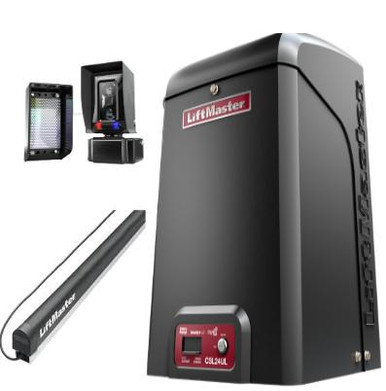
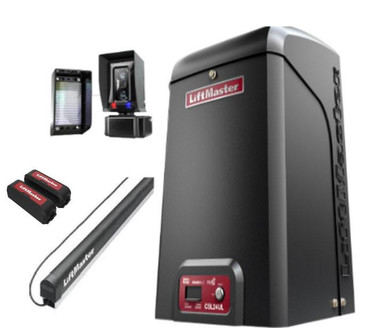
| CSL24UL |
Chain drive, 24 VDC, 1/2 HP, battery backup |
Up to 50 ft or 1,500 lb |
High-traffic commercial. Continuous duty with battery backup — the standard choice for a gated community entrance. |
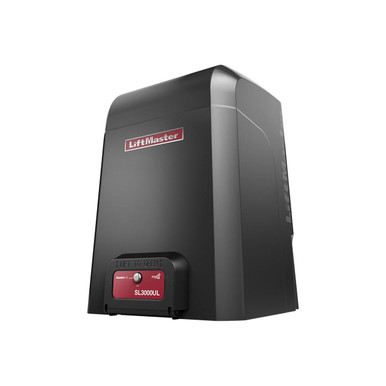
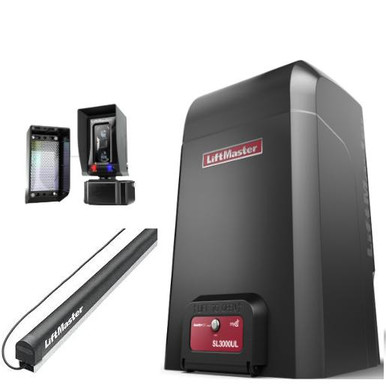
| SL3000UL |
Chain drive, 120 VAC, 1/2 or 1 HP |
1/2 HP: 50 ft or 1,000 lb
1 HP: 50 ft or 2,000 lb |
High-traffic commercial on mains power. 30:1 worm gear reducer, 12 in per second, continuous duty. |
| SL585UL |
Chain drive, dual-voltage AC, single or three phase, 1/2 to 1.5 HP |
From 45 ft / 1,000 lb up to 75 ft / 1,900 lb depending on HP |
Industrial. Heavy gates, high cycle counts, sites with three-phase power. |
| SL595UL |
Chain drive, AC, heavy industrial |
Up to 90 ft or 2,500 lb |
The heaviest LiftMaster slide operator. Long industrial and secure-site gates. |
Ratings are maximums and they are not simultaneous — a 50 ft gate at the top of its weight range is a different proposition from a 20 ft one. If your gate is near the limit on either axis, size up. Check the model's data sheet for the specific rating on your configuration.
Rack and pinion or chain drive?
These are the two ways a slide operator moves a gate, and the choice affects installation as much as performance.
Rack and pinion drives a toothed rack bolted along the gate frame. Nothing runs across the driveway, it is quieter, and there is no chain to tension or replace. It suits residential gates and lighter loads.
Chain drive pulls the gate with a length of #41 roller chain anchored at both ends of the gate's travel. It carries far more weight, which is why every commercial and industrial model uses it. The SL3000UL ships with 50 ft of #41 black oxide chain; longer gates need additional chain and a master link. Chain stretches with use and needs periodic tensioning.
Cantilever slide gates
A cantilever gate carries no ground track. It is counterbalanced on rollers mounted to posts, so the leaf overhangs the opening with nothing crossing the driveway — no track to fill with gravel, ice or debris, and nothing to catch a low vehicle. That makes it the usual choice for industrial yards and any entrance that has to stay clear.
Cantilever construction does not need a different operator, but it does change the sizing. A cantilever leaf includes its counterbalance tail, so the total moving weight is greater than the clear opening suggests, and the leaf is longer than the gap it covers. Size the operator on the full leaf, not the opening.
The gate has to roll freely before the operator goes in. Worn V-groove wheels, a bent or gravel-packed track, or a post that has shifted will make any operator work far harder than its rating and fail early. If the gate is heavy to push by hand, fix that first. See sliding gate hardware — wheels, rollers, track and catches.
UL325 and monitored entrapment protection
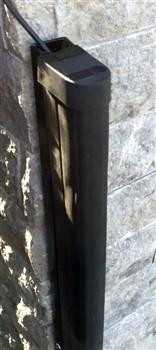
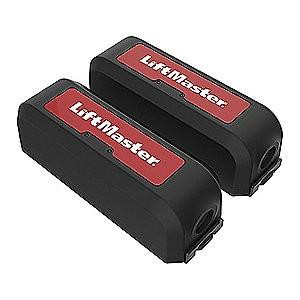
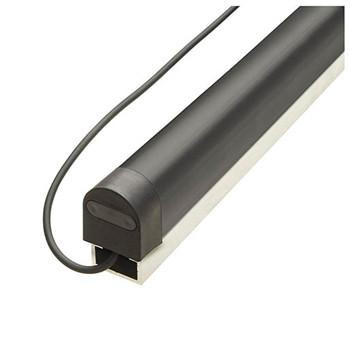
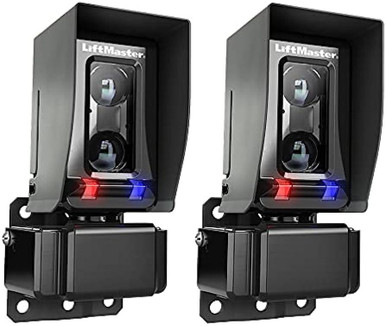
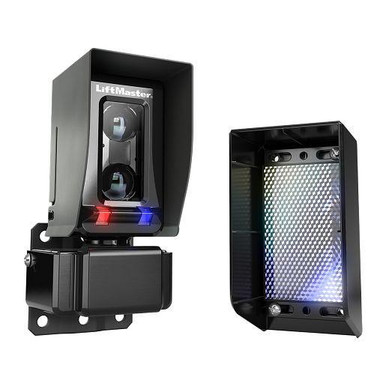
Current LiftMaster slide operators are UL325 and UL991 listed for Class I through IV, but compliance depends on monitored external entrapment protection being installed for each entrapment zone — and only LiftMaster monitored devices will satisfy the board. A missing, misaligned or unmonitored photo eye or edge puts the operator into a fault by design. If a gate has stopped closing after a repair, check the eyes and edges before you suspect the control board.
Common questions
What is the difference between a slide gate operator and a sliding gate opener? Nothing. Along with "rolling gate opener," they are three names for the same machine. LiftMaster calls them operators.
How much chain do I need? Roughly twice the gate's travel, plus slack for anchoring and tensioning. The SL3000UL includes 50 ft. Longer gates need extra #41 chain and a master link.
Can a slide operator run on solar? The DC models can. AC models such as the SL3000UL, SL585UL and SL595UL cannot — they need mains power at the operator.
What power do I need at the pad? The SL3000UL takes 120 VAC single phase. The SL585UL is dual voltage and available in single or three phase. The DC models convert incoming AC to 24 VDC and keep running on batteries during an outage.
How fast do they open? The SL3000UL runs at about 12 inches per second. Speed matters more than you would think on a long gate — a 40 ft leaf at 12 in/sec takes about 40 seconds to clear.
Parts, boards and accessories
Replacement parts for the DC slide family, including the diagram and full ref tables, are on the CSL24U, CSL24UL, CSL24V & CSL24VDC parts page. The current UL325 main control board for the DC pad-mounts is the K1D8389-1CC. Drive chain and master links are on the chain & masterlinks page.
Also see: LiftMaster gate operator parts · safety sensors and loop systems · LiftMaster remotes
Not sure which model fits your gate? Call 866-965-5599.




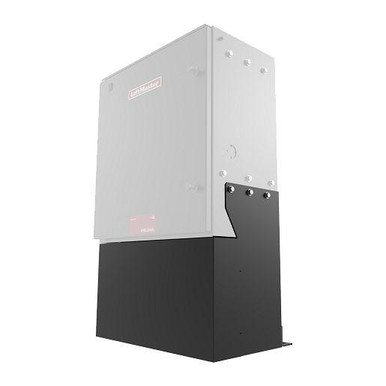
![MSEL Steel Stand for mounting to concrete Pad (posts not included) [50-34233]](https://cdn11.bigcommerce.com/s-32eq2wsbti/products/12606/images/230450/liftmaster-msel-steel-stand-for-mounting-to-concrete-pad-posts-not-included-50-34233-msel__35449.1721412403.386.513.jpg?c=2)
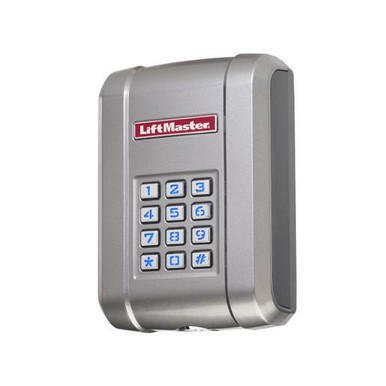
![Liftmaster KPW5 wireless keypad 5 code Security+ 2.0 [KPW5MC]](https://cdn11.bigcommerce.com/s-32eq2wsbti/products/12311/images/232196/liftmaster-kpw5-wireless-keypad-5-code-security-2.0-kpw5mc-kpw5__44304.1725051232.386.513.jpg?c=2)